
APPLICATIONS & RETAIL NEEDS
Retail & Deli Food Packaging Applications
From supermarket deli counters to ready-to-eat retail displays and grab-and-go foods, packaging requirements vary with portion formats, presentation, and customer handling.

Supermarket Deli Counters
Roasted meats and prepared sides are often portioned and packed to order at deli counters. Container capacity, shape, and rim dimensions affect portion presentation, counter handling, and the space available for price labels.

Prepacked Entrées & Hot Food Displays
Rotisserie chicken, roasted meats, and larger prepared entrées may be presented in heated retail displays. Container capacity, base stability, and lid clearance are important selection factors, alongside the intended holding conditions.

Chilled Deli Sides & Grab-and-Go
Chilled salads, prepared side dishes, and portioned appetizers are commonly sold from refrigerated self-service cases. Compact container footprints, suitable lid configurations, and label placement affect shelf organization, product visibility, and customer pickup.
Portion Size & Counter Handling
Define portion weights, food volume, and container depth for the intended retail format. Consider filling height, counter workspace, and how staff weigh, close, and label containers during service.
Lid Fit & Product Visibility
Confirm lid dimensions, closure fit, and clearance above the finished food. Where product visibility is important, evaluate suitable clear-lid options and verify compatibility with the selected container and intended storage conditions.
Labeling & Shelf Presentation
Plan appropriate space for product names, price labels, barcodes, ingredient information, and other required retail details. Label placement, container orientation, and display dimensions should suit the intended shelf or counter arrangement.
Hot & Cold Display Conditions
For heated or refrigerated displays, confirm the intended temperature, holding duration, and container–lid configuration. Stacking, customer pickup, and handling after purchase should also be considered for the selected packaging format.
CONTAINER SELECTION
Choosing Aluminum Foil Containers for Retail & Deli Food Packaging
Explore aluminum foil container formats for supermarket deli counters, prepared-food displays, and grab-and-go retail. Available options vary in shape, capacity, rim design, and lid configuration to meet different presentation and packaging needs.
For Deli Sides & Ready-to-Eat Retail
Aluminum foil containers for portioned retail foods offer different capacity and presentation options for prepared side dishes, deli specialties, and grab-and-go items. Container capacity, shelf footprint, surface finish, lid clearance, and labeling space are key factors in selecting a suitable format.
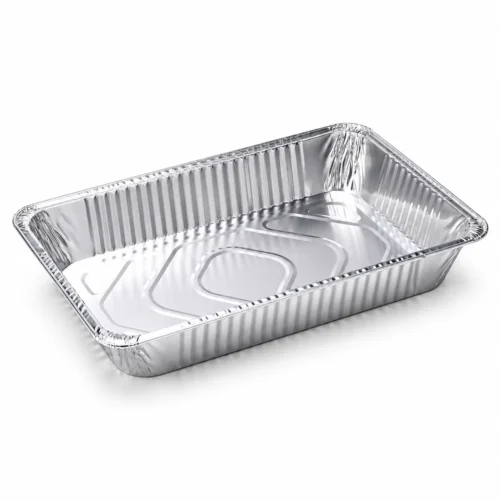
Full Size Deep Aluminum Foil Steam Table Pan
Request SampleTop Out Dimensions 526 × 325 mm Bottom Dimensions 451 × 251 mm Depth / Height 76 mm Capacity 9700 mL / 9.7 L Carton Dimensions 54.5×34×35cm 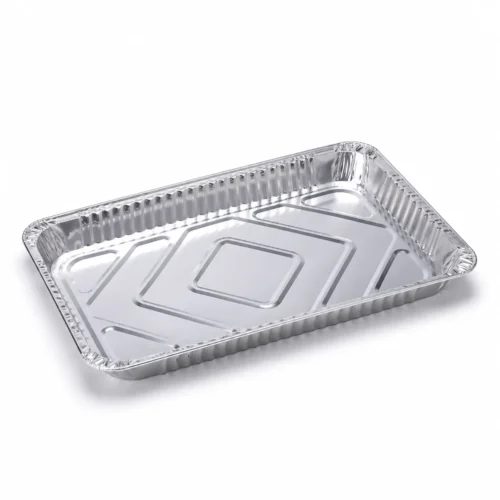
Full Size Shallow Aluminum Foil Steam Table Pan
Request SampleTop Out Dimensions 526 × 328 mm Bottom Dimensions 480 × 278 mm Depth / Height 44 mm Capacity 5400 mL / 5.4 L Carton Dimensions 53.7*32*33.6cm 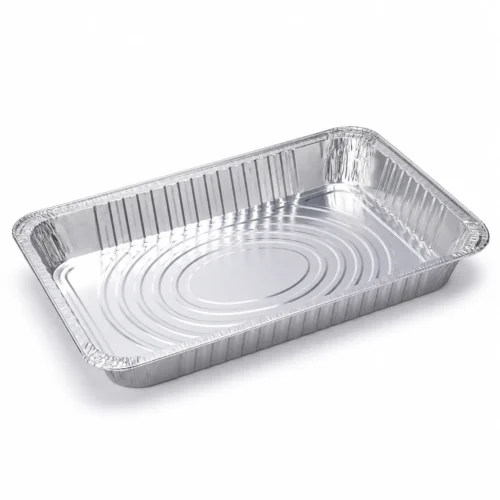
Full Size Medium Depth Aluminum Foil Steam Table Pan
Request SampleTop Out Dimensions 526 × 326 mm Bottom Dimensions 462 × 261 mm Depth / Height 55 mm Capacity 6700 mL / 6.7 L Carton Dimensions 55*35*35.5cm
Products could not be loaded. Reload page
For Prepared Entrées & Deli Counter Service
Larger-format aluminum foil pans offer a range of depths and capacities for prepared entrées, roasted meats, and family-size portions. Container selection depends on food volume, base support, lid compatibility, display space, and intended holding conditions.
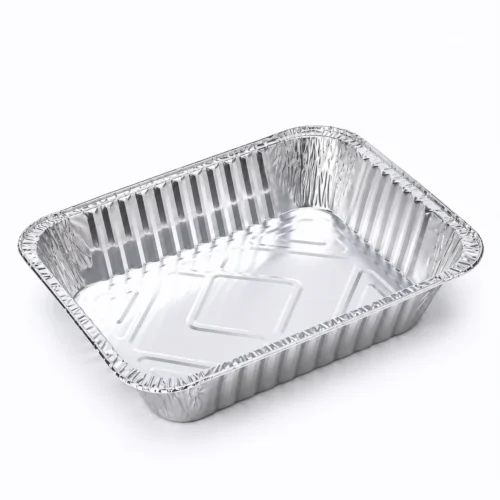
Half Size Deep Aluminum Foil Steam Table Pan
Request SampleTop Out Dimensions 322 × 262 mm Bottom Dimensions 258 × 198 mm Depth / Height 60 mm Capacity 3500 ml Carton Dimensions 46*27.5*35cm 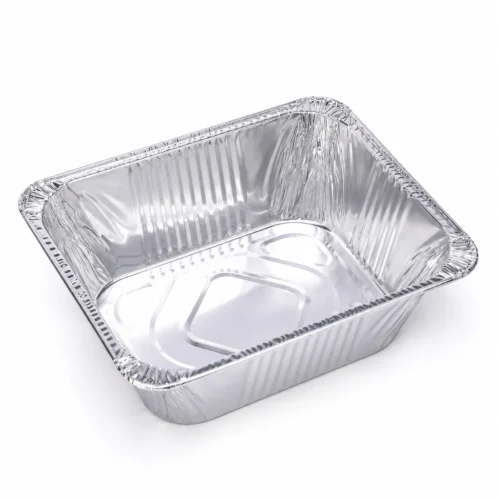
Half Size Extra Deep Aluminum Foil Steam Table Pan
Request SampleTop Out Dimensions 323 × 263 mm Bottom Dimensions 242 × 180 mm Depth / Height 105 mm Capacity 5600 ml Carton Dimensions 59.6*27.8*33.4cm 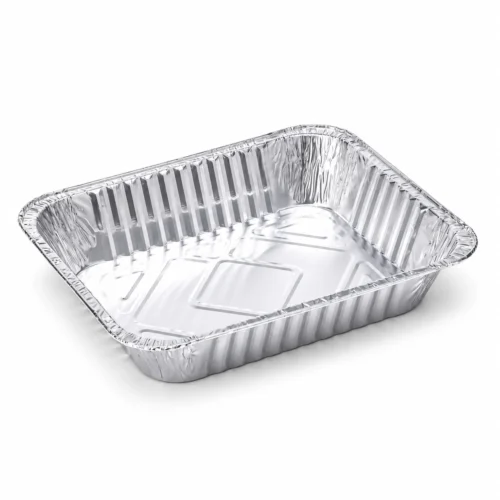
Half Size Shallow Aluminum Foil Steam Table Pan
Request SampleTop Out Dimensions 322 × 262 mm Bottom Dimensions 270 × 210 mm Depth / Height 40 mm Capacity 2550 ml Carton Dimensions 42.5*34*29cm 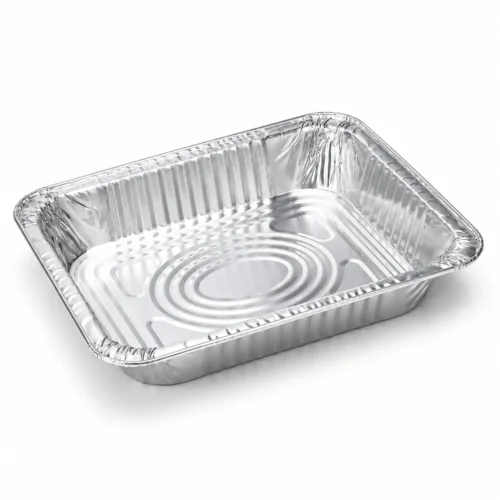
Half Size 65 mm Deep Aluminum Foil Steam Table Pan
Request SampleTop Out Dimensions 323 × 265 mm Bottom Dimensions 260 × 200 mm Depth / Height 65 mm Capacity 3500 ml Carton Dimensions 50.5*29*34cm
Products could not be loaded. Reload page
SPECIFICATION REVIEW
Confirm Your Retail & Deli Container Specifications
Before finalizing a container format, confirm the portion size, display dimensions, lid and labeling requirements, and handling conditions involved in your retail operation.

Food Portion & Filling Requirements
Specify the food type, target portion weight or volume, and required filling height. Consider whether products are packed to order, sold by weight, or prepared in fixed retail portions.
Container Dimensions & Display Fit
Confirm top and bottom dimensions, usable depth, and rim configuration. Check the container footprint against deli weighing stations, counter workspace, shelf facings, and available display clearance.
Lid Clearance & Label Placement
Identify the intended lid type, closure method, and clearance above the food. Confirm suitable space for price labels, barcodes, ingredient information, and other required retail details without interfering with lid fit.
Hot & Cold Display Conditions
Define the intended heated or refrigerated display temperatures and holding durations. Assess stacking, customer pickup, and handling after purchase, and verify container and lid suitability for the intended conditions.
Samples, Documentation & Ordering
Share relevant product codes, drawings or reference samples, estimated order quantities, and carton packaging requirements. Identify any documentation needed to confirm the selected container specification before ordering.
CUSTOMIZATION SCOPE
Custom Aluminum Foil Container Options for Retail & Deli Packaging
Explore aluminum foil container customization for supermarket deli counters, prepared-food displays, and grab-and-go retail. Options include container dimensions, portion configurations, foil specifications, lid requirements, surface appearance, branding, and carton packaging. Non-standard requests are subject to material, tooling, and production feasibility review.


Container Shapes & Portions
Container shapes, depths, and compartment layouts for deli sides, prepared entrées, and retail portions.

Rim & Lid Details
Rim profiles, lid configurations, and clearance requirements for retail presentation and labeling.
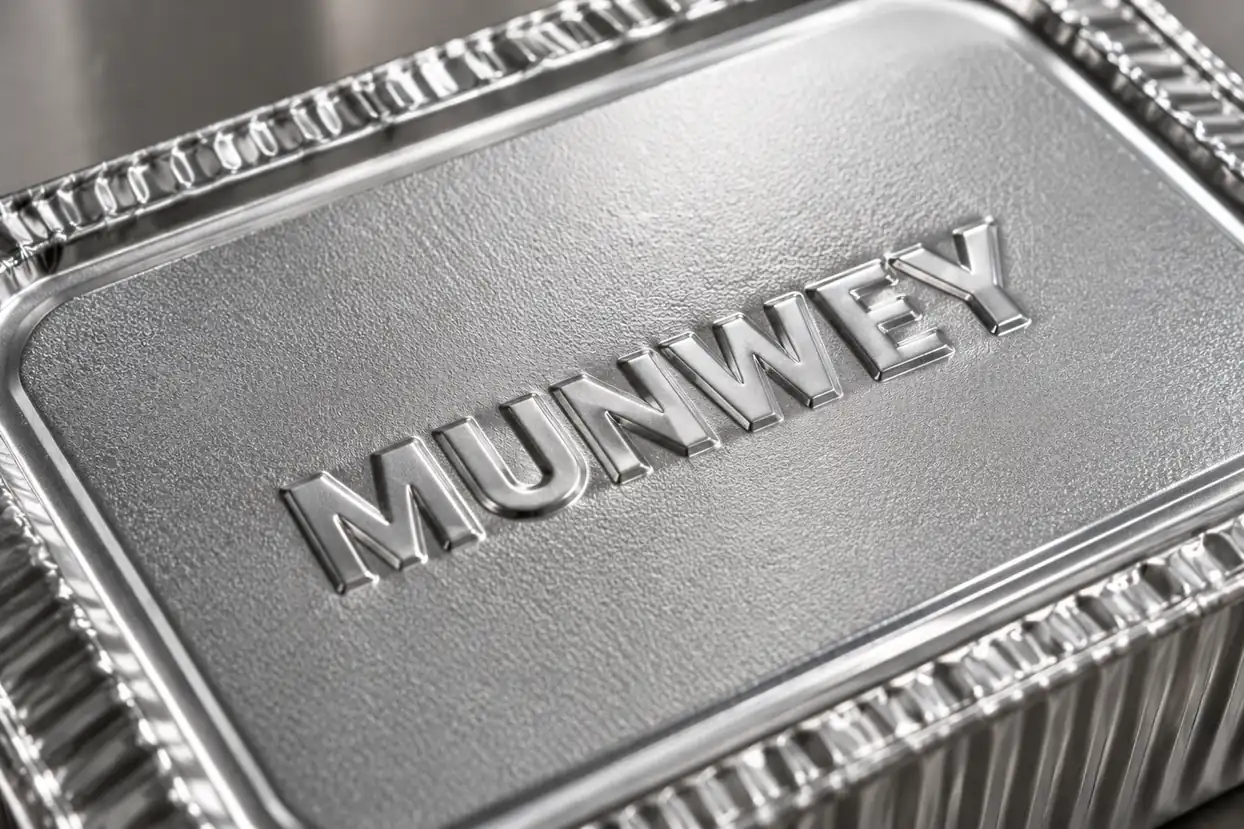
Surface & Branding Options
Available silver, gold, and other finishes, with retail branding and surface-marking requirements.
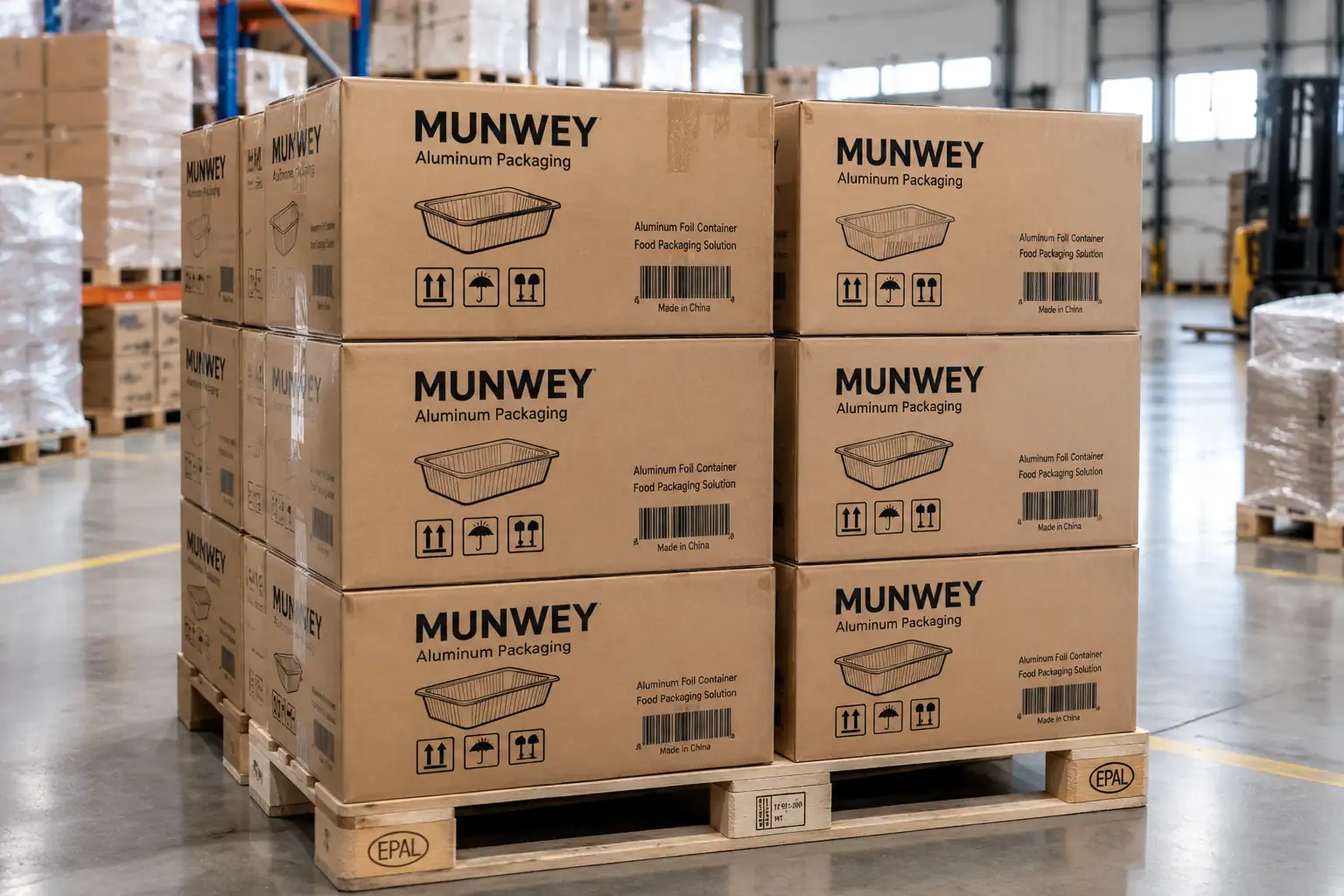
Carton Packaging & Supply
Carton configurations, case labeling, and estimated order quantities for retail distribution.
Container Shape & Portion Layout
Discuss container shapes, compartment configurations, rim profiles, and portion arrangements for deli sides, prepared entrées, and family-size offerings. New designs are subject to tooling and production feasibility review.
Size, Depth & Display Fit
Specify target container dimensions, portion capacities, and usable depths based on retail food formats. Consider shelf footprint, counter workspace, display clearance, and lid height when reviewing non-standard sizes.
Foil Material & Specifications
Review available aluminum alloy, temper, foil thickness, and material options in relation to container dimensions, food load, and intended use. Material selection and any special specifications require confirmation against the proposed container configuration.
Rim, Lid & Label Requirements
Identify the preferred lid type, rim geometry, closure method, and clearance above the food. Consider space for retail price labels, barcodes, and product information. Container–lid compatibility must be confirmed for the selected configuration and use conditions.
Surface Finish & Retail Branding
Discuss available silver, gold, and other surface finish options, along with custom labeling, packaging branding, and requests for logo embossing or product markings. Special colors, coatings, embossing, and branding methods are subject to material, tooling, and production feasibility review.
Carton Packaging & Retail Supply
Define carton quantities, packing configurations, labeling requirements, and estimated order volumes for retail stores or distribution channels. Custom carton specifications and supply arrangements depend on confirmed product requirements and order quantities.
MANUFACTURING & QUALITY
Manufacturing & Quality for Retail & Deli Food Packaging
MUNWEY combines aluminum processing with foil container manufacturing. For retail and deli packaging, material specifications, container forming, dimensional consistency, and relevant quality documentation are important considerations for supermarket sourcing and repeat orders.


Integrated Aluminum Processing
MUNWEY’s manufacturing operations include aluminum rolling, slitting, and annealing. Aluminum alloy, temper, foil thickness, and surface requirements are considered according to the selected container specifications and intended retail applications.

Aluminum Foil Container Forming
MUNWEY manufactures aluminum foil containers in different shapes, depths, and compartment configurations. Tray geometry, rim profiles, and forming details can be reviewed against the selected product design and intended deli or retail packaging requirements.

Dimensional & Specification Review
Container dimensions, depth, rim geometry, and lid clearance provide a basis for evaluating retail packaging specifications. Drawings, samples, and agreed requirements help establish reference points for product evaluation and repeat-order consistency.
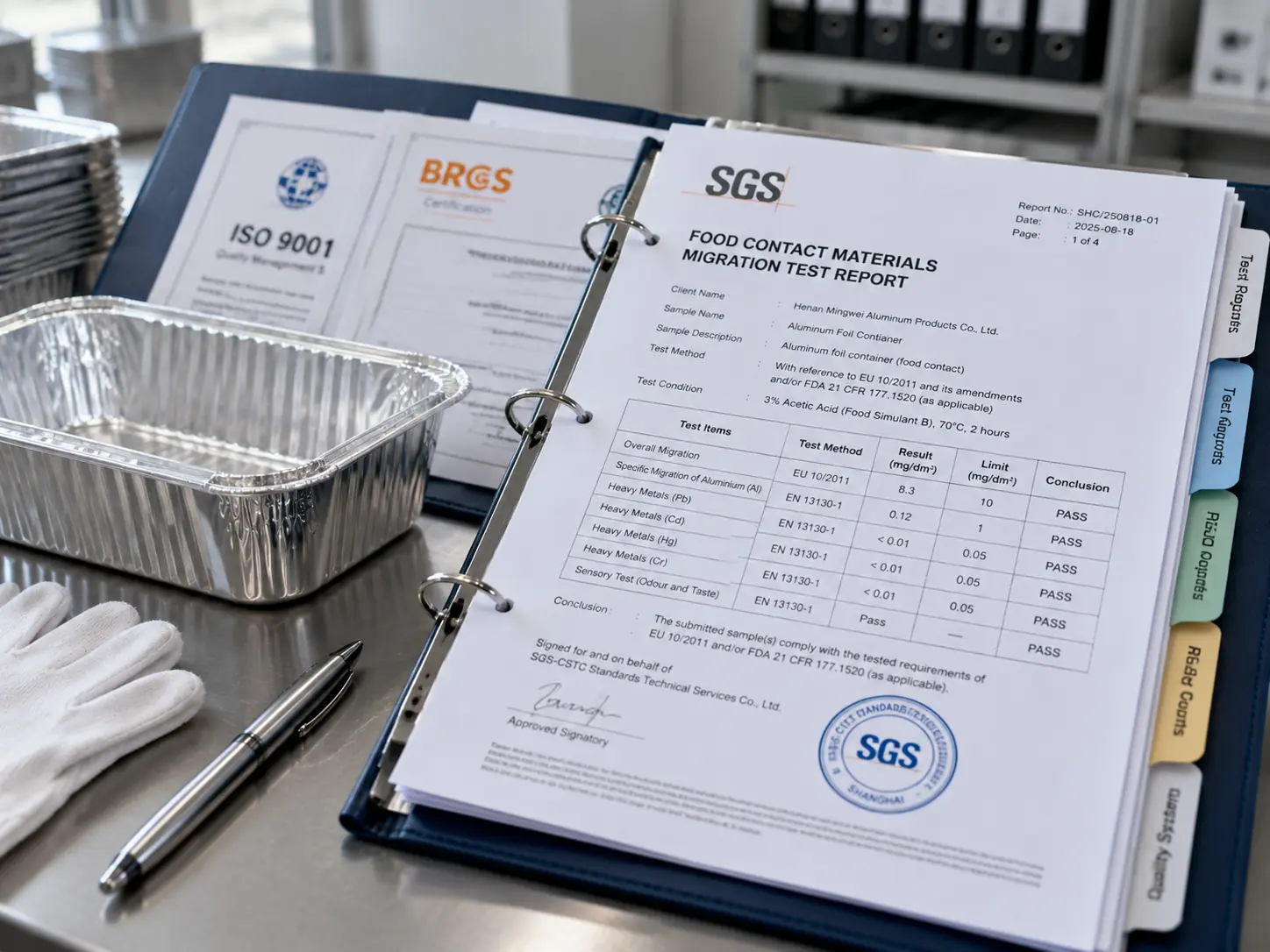
Quality Systems & Documentation
Available quality-system records, material specifications, and supporting documentation provide a basis for buyer review. Certificate validity, document scope, and applicable food-contact requirements must be confirmed for the selected product, destination market, and intended use.
FAQ & PROJECT INQUIRY
Let’s Discuss Your Retail & Deli Container Requirements
Find answers to common questions about aluminum foil containers for deli counters and prepared-food displays, including lid options, retail labeling, display conditions, customization, samples, and ordering. Share your requirements with MUNWEY to discuss available container options and quotation details.
Frequently Asked Questions
Practical answers about container specifications, filling and sealing requirements, storage conditions, customization, minimum orders, and quality documentation for ready meal production.
Start with the food type, target portion weight or volume, container dimensions, and usable depth. Consider counter workspace, shelf footprint, lid clearance, and labeling space. The selected container should also be evaluated against the intended storage, display, and customer handling conditions.
Lid options vary by container format. Confirm the rim configuration, lid clearance, and closure requirements for the selected product. Where clear lids are preferred, consider product visibility and the available space for price labels, barcodes, and other retail information. Any special lid performance requirements should be verified for the intended use.
Suitability depends on the selected container, lid material, food type, display temperature, and holding duration. For heated or refrigerated displays, the complete container–lid configuration should be reviewed against the intended conditions. Any reheating requirements after purchase should be evaluated separately.
MUNWEY can review customization requests involving container dimensions, shapes, compartment layouts, foil specifications, surface finishes, and packaging branding. Special colors, coatings, logo embossing, and non-standard designs are subject to material, tooling, and production feasibility review.
Share your intended food application, target portion size, preferred container dimensions or product code, lid requirements, estimated order quantity, and destination market. Information about retail display conditions, labeling, carton packaging, or reference samples can also help clarify the required specification.
MUNWEY’s general minimum order quantity is 300 pieces. Specific products and customized projects may have different order requirements. Sample requests can be discussed according to the selected container format and availability. Please include your intended application and product requirements when contacting us.
Documentation availability depends on the selected product, material, lid configuration, destination market, and intended use. Share any quality-system, material specification, or food-contact documentation required by your procurement team so the availability, validity, and applicable scope of supporting records can be reviewed.
Contact MUNWEY
Tell us about your retail or deli packaging project, including container specifications, portion sizes, lid and labeling requirements, intended display conditions, estimated order quantity, and destination market. Our team can review your requirements and discuss available product options, customization, samples, and quotation details.