

Asia-Pacific trade cooperation is back in focus as Shenzhen hosts the 2026 APEC Economic Leaders’ Meeting on November 18–19. Under the theme Building an Asia-Pacific Community to Prosper Together, China’s APEC year has placed openness, innovation and cooperation at the center of regional discussions.
For food packaging importers, distributors and procurement teams, these developments raise practical questions about cross-border sourcing, logistics reliability, import requirements and supplier coordination. Aluminum foil packaging sourcing teams, in particular, need to consider how regional trade developments may affect product availability, landed costs and long-term supply planning.
Against this backdrop, understanding regional cooperation and its potential implications can help sourcing teams make better-informed procurement decisions.
1. What APEC 2026 Signals for Asia-Pacific Trade
APEC 2026 provides a broader regional context for how trade, investment and business cooperation may develop across the Asia-Pacific. For packaging importers and sourcing teams, the key is to understand what these priorities could mean for cross-border sourcing and supply planning.
APEC 2026: Building an Asia-Pacific Community to Prosper Together
China is hosting APEC in 2026, with Shenzhen as the venue for the 33rd APEC Economic Leaders’ Meeting on November 18–19. The year’s theme is Building an Asia-Pacific Community to Prosper Together.
The APEC 2026 agenda focuses on three priorities:
- Openness: Supporting an open economy and promoting trade and investment facilitation.
- Innovation: Encouraging technological development, digital transformation and new approaches to economic growth.
- Cooperation: Strengthening regional connections and collaboration between economies and businesses.
These priorities are relevant to companies operating across international supply chains. Importers, manufacturers and distributors depend on predictable trade procedures, reliable transportation and effective communication between business partners.
The APEC CEO Summit, held in Shenzhen on November 17–18, has also brought business leaders together to discuss regional cooperation and future economic development.
For aluminum foil packaging importers and sourcing teams, the significance is not that a new purchasing advantage has already taken effect. Rather, the discussions provide useful context for understanding where regional business cooperation may develop.
Why Regional Trade Cooperation Matters to Businesses
Asia-Pacific supply chains connect manufacturing facilities, raw material suppliers, logistics providers, distributors and end markets across different economies.
A food packaging importer may source products from China, arrange international shipping through regional ports and distribute finished packaging to food manufacturers or wholesale customers in another market.
Each stage depends on more than the manufacturer’s quoted price. Customs procedures, documentation, transportation schedules, import requirements and inventory planning all influence the final purchasing decision.
Regional cooperation can help address some of these challenges by encouraging:
- More efficient cross-border trade procedures.
- Improved information exchange between businesses and authorities.
- Stronger transportation and logistics connectivity.
- Greater cooperation on digital trade and supply chain resilience.
These areas are particularly relevant to packaging businesses because delivery schedules and product availability can affect downstream food production, distribution and retail operations.
What APEC Can and Cannot Change
APEC is a regional economic cooperation forum rather than a free trade agreement that automatically grants preferential tariff treatment.
Its decisions are based on voluntary cooperation and consensus. APEC does not create automatic legal obligations for its member economies, and participation does not mean that all economies apply identical import rules.
For aluminum foil packaging sourcing teams, several distinctions are important:
- APEC cooperation does not automatically eliminate customs duties.
- Regional trade discussions do not replace individual market import requirements.
- APEC does not establish a single food-contact approval system for all member economies.
- A policy recommendation does not necessarily mean that a new procedure has already been implemented.
Importers should therefore distinguish between regional policy direction and measures that have actually entered into force.
For further information, see How APEC Operates.
2. Where Regional Cooperation Could Influence Sourcing Conditions
Regional cooperation can affect sourcing through trade facilitation, supply chain connectivity and digital coordination. For aluminum foil packaging procurement teams, these areas are most useful when translated into practical documentation, logistics and supplier-management considerations.
Trade Facilitation and Non-Tariff Barriers in Food Trade
One development at APEC 2026 worth noting is the attention being given to non-tariff barriers in food trade.
On November 17, the APEC Business Advisory Council (ABAC) called for practical action to strengthen regional growth and cooperation. Its November 17 recommendations included addressing food-trade barriers, promoting more coherent digital trade rules and improving trade and logistics procedures.
For food packaging importers, these discussions highlight the importance of preparing accurate product and import documentation.
Depending on the destination market and product classification, importers may need to review:
- Product descriptions and customs classification.
- Country-of-origin information.
- Commercial invoices and packing lists.
- Applicable food-contact declarations and supporting documents.
- Import permits or other market-specific requirements, where applicable.
Aluminum foil food containers should not be treated as interchangeable with every other food packaging material. Their material construction, intended food-contact conditions and destination-market requirements need to be considered when preparing compliance documentation.
Regional cooperation may encourage more efficient procedures over time, but importers should continue checking the actual requirements of the importing economy.
Supply Chain Resilience and Regional Connectivity
Supply chain resilience is another important area of regional cooperation.
International sourcing can be affected by shipping capacity, port congestion, transportation disruptions, changing freight rates and unexpected delays. Even when a manufacturer can complete production on schedule, the overall delivery timeline may still depend on logistics conditions.
APEC’s 2026 trade discussions include strengthening supply chain connectivity and addressing supply chain bottlenecks. The regional agenda also emphasizes digital trade procedures and paperless trade.
For importers, these developments reinforce several practical considerations:
- Evaluate alternative shipping routes where commercially appropriate.
- Distinguish manufacturing lead time from international transportation time.
- Maintain realistic replenishment schedules.
- Coordinate product availability with packaging and inventory requirements.
- Establish communication procedures for order changes and delivery disruptions.
Supply chain resilience does not simply mean holding more inventory. It means understanding the dependencies between production, shipping, customs clearance and downstream distribution.
A well-planned sourcing arrangement should allow procurement teams to identify potential delays before they affect customer commitments.
Digital Trade and Cross-Border Business Coordination
Digital cooperation can also influence how businesses manage international sourcing.
Cross-border purchasing involves the exchange of product specifications, quotations, purchase orders, shipping documents and compliance records. Delays or inconsistencies in these documents can create unnecessary communication and administrative work.
Digital trade cooperation and paperless procedures aim to improve the exchange of information across business and regulatory systems.
For packaging procurement teams, practical priorities include:
- Keeping product specifications consistent across quotations and purchase orders.
- Maintaining clear document versions.
- Confirming packaging and labeling requirements before production.
- Sharing shipment information in a timely manner.
- Keeping product and compliance documentation accessible to relevant purchasing and quality teams.
These practices do not depend on a single regional digital platform. Sourcing teams can improve coordination within their own procurement processes while monitoring how cross-border digital trade initiatives develop.

3. What Food Packaging Buyers Should Review in 2026
Regional trade developments are useful only when translated into purchasing decisions. For aluminum foil packaging procurement teams, three areas deserve particular attention: market access, total landed cost and supply continuity.
Table 1. Regional Trade Developments and Sourcing Considerations
| Regional development | What buyers should review | Potential procurement impact |
|---|---|---|
| Trade facilitation | Import documentation, customs classification and border procedures | Better documentation preparation and clearance planning |
| Food-trade barriers | Destination-market requirements and applicable food-contact documentation | Compliance preparation and fewer avoidable documentation gaps |
| Supply chain resilience | Shipping routes, port reliability and replenishment arrangements | Better delivery continuity and inventory planning |
| Digital trade | Electronic documents, information exchange and version control | More efficient coordination between buyers, suppliers and logistics partners |
These are potential areas of influence rather than guaranteed benefits. Procurement teams should verify actual changes in their destination markets before adjusting purchasing assumptions.
Destination-Market Duties, Origin and Food-Contact Requirements
Before placing an international order, importers should establish the applicable import requirements for the destination market.
Customs classification is an important starting point. The correct Harmonized System (HS) classification depends on the product’s objective characteristics and the importing economy’s tariff schedule. Importers should not assume that all aluminum foil food containers fall under the same national tariff code.
The applicable customs duty may also depend on the country of origin and whether a valid preferential trade agreement applies.
The World Trade Organization’s Tariff and Trade Data platform provides information on applied and bound tariff rates, import data and trade measures. However, the actual tariff applicable to a shipment should be confirmed against the importing country’s current customs schedule and relevant origin rules.
Food-contact requirements must be reviewed separately.
For example, the United States and the European Union have their own regulatory frameworks for food-contact materials. A document or registration applicable in one market should not automatically be treated as sufficient for another.
Procurement teams should confirm:
- Whether the finished packaging construction is suitable for the intended food-contact application.
- Whether material and surface-treatment information is available.
- Which declarations, authorizations or test reports are required in the destination market.
- Whether the documentation covers the actual product and intended conditions of use.
In the United States, certain food-contact substances regulated as food additives require an authorization pathway, which may include a Food Contact Notification (FCN). The FDA explains that an FCN is specific to the manufacturer, substance and conditions of use identified in the notification.
In the EU, food-contact materials must comply with the applicable framework legislation and relevant specific measures.
Factory management-system certifications and facility registrations should not be confused with product-specific food-contact authorization or compliance evidence.
Relevant official guidance includes the FDA’s Determining the Regulatory Status of Components of a Food Contact Material and the European Commission’s Food Contact Materials Legislation.
Total Landed Cost and Logistics Reliability
Comparing supplier quotations on unit price alone can lead to an incomplete purchasing decision.
The total landed cost includes all the expenses required to bring products from the manufacturing facility to the buyer’s intended destination.
Table 2. Cost Components and What Buyers Should Review
| Cost component | What buyers should review |
|---|---|
| Product cost | Unit quotation, order quantity and product specifications |
| Packaging cost | Inner packaging, cartons, labeling and branding requirements |
| International freight | Shipping method, route, freight quotation and surcharges |
| Import duties and taxes | Applicable tariff classification, origin and destination-market rules |
| Customs and handling | Clearance, documentation, terminal and handling charges |
| Inland logistics | Delivery to warehouse, storage and distribution |
| Financial factors | Currency exchange, payment terms and financing costs |
For aluminum foil containers, nesting efficiency and carton volume are particularly relevant to freight planning.
Many foil containers are designed to nest inside one another. Their nesting depth, stack configuration, carton dimensions and protective packaging influence how efficiently products can be packed and loaded into a shipping container.
A product with a competitive unit price may still result in a less efficient shipment if its carton volume is relatively high or its nesting arrangement makes less effective use of the available loading space.
Procurement teams should therefore evaluate:
- Container dimensions and nesting efficiency.
- Carton dimensions and the number of units per carton.
- Total carton volume and shipping-container utilization.
- The allocation of ocean freight across the actual shipment quantity.
These factors affect the freight cost allocated to each carton or individual container. The actual result depends on product geometry, packaging configuration, loading arrangements and the shipment’s freight terms. No fixed freight saving should be assumed without a comparable loading calculation.
Any comparison should be made on the same product specifications, order quantities, shipping terms and delivery scope.
For example, a lower factory quotation may not result in a lower landed cost if the shipment requires additional packaging, has less efficient nesting or incurs higher transportation expenses.
Importers should also distinguish between quoted freight rates and actual shipment costs. Transportation prices and schedules can change, so estimates should be rechecked when the order is arranged.
Supply Continuity and Product Readiness
A reliable packaging supply arrangement requires coordination between purchasing forecasts, product availability and replenishment requirements.
Sourcing teams should consider their expected demand, purchasing frequency and seasonal patterns before confirming an order.
For aluminum foil containers, procurement teams should identify the required product range, order quantities, packaging format and any special branding or customization needs.
The preparation requirements for standard products and customized projects may differ.
Table 3. Purchasing Model and Buyer Preparation
| Purchasing model | Buyer preparation |
|---|---|
| Standard products | Confirm existing specifications, product availability, order quantities and replenishment demand |
| Customized products | Confirm design requirements, material options, tooling needs, packaging details and project-specific validation |
Standard products may be more straightforward to reorder when specifications and packaging remain unchanged. Customized projects may require additional preparation for material selection, tooling, sampling, artwork approval or production validation.
Procurement teams should also establish realistic inventory coverage and reorder points based on actual demand and replenishment experience.
For procurement teams still comparing available product options, MUNWEY’s aluminum foil container range provides a starting point for reviewing the relevant product category.
The earlier guides on choosing the right foil pan size and measuring foil pan dimensions can also help sourcing teams prepare product information before requesting quotations. These are separate product-selection tasks, so they are not covered again in this regional trade analysis.
4. How Regional Sourcing Trends Connect to Factory Production
Regional trade trends ultimately matter at the factory level when they are translated into clear product, material and supply requirements. The following considerations show how sourcing teams can turn market expectations into actionable manufacturing instructions.
Translating Market Demand into Factory Requirements
Regional sourcing requirements need to be translated into specific production instructions before a manufacturer can assess a project accurately.
A general request for aluminum foil food containers is not enough to establish the appropriate production arrangement. Buyers should provide product dimensions, intended application, required material characteristics, expected quantities and packaging requirements.
MUNWEY offers 8011 and 3003 aluminum alloy options for food container production, but these alloys are not interchangeable or universal food-contact approvals. The appropriate alloy should be confirmed against the intended container design, forming requirements, relevant material documentation and applicable food-contact conditions.
A useful manufacturing brief should include:
- Product identity: Container shape, dimensions, depth, compartments and intended application.
- Material requirements: Alloy designation, temper, thickness and relevant material documentation.
- Production requirements: Standard product specification or proposed structural changes.
- Order quantity: Expected quantity, carton configuration and purchasing frequency.
- Packaging requirements: Inner packaging, carton specifications, labels and branding.
- Quality requirements: Agreed samples, inspection criteria and applicable documentation.
Standard products and non-standard or new tooling projects should be assessed separately according to required specifications, tooling arrangements, materials, production feasibility and project scope.
This distinction helps procurement teams provide more useful RFQ information and allows manufacturers to evaluate actual production requirements rather than relying on incomplete purchasing descriptions.
Matching Standard Products with OEM and ODM Requirements
Not every sourcing project requires a new product design.
Some procurement teams can work with existing product specifications, while others may need changes to packaging, branding, material construction or product structure.
The appropriate cooperation model depends on the actual project requirements.
Table 4. Cooperation Level and Typical Project Considerations
| Cooperation level | Typical project considerations |
|---|---|
| Standard product supply | Existing specifications, product availability and order quantities |
| Packaging branding | Printed cartons, labels and packaging design |
| Product adjustments | Material, surface treatment, color or structural changes |
| New product development | Design requirements, tooling, sampling and validation |
| System adaptation | Compatibility with the buyer’s equipment, lids and production process |
Customized projects may involve additional tooling, material minimums, packaging quantities and validation costs. These should be assessed according to the specific product and project rather than assumed to follow standard-product purchasing conditions.
For sourcing teams with branding or product-development requirements, MUNWEY’s OEM and ODM services provide a relevant starting point for discussing potential cooperation.
Preparing for Stable Production and Supply
Before placing a repeat order, procurement teams should confirm that the approved product specifications and packaging versions remain consistent with the previous order.
Important items to check include:
- Product drawing and specification revision.
- Aluminum alloy, temper and material requirements.
- Container dimensions and agreed tolerances.
- Carton configuration, labeling and printed artwork.
- Approved sample and packaging version.
For a new or significantly changed order, the sourcing team and manufacturer should review the pre-production sample and relevant production details before mass production.
Pre-production confirmation helps identify discrepancies in product construction, material selection, packaging or labeling before they affect the full order.
Any change to an approved specification or packaging version should be documented and confirmed by the relevant parties.
MUNWEY’s Manufacturing Background
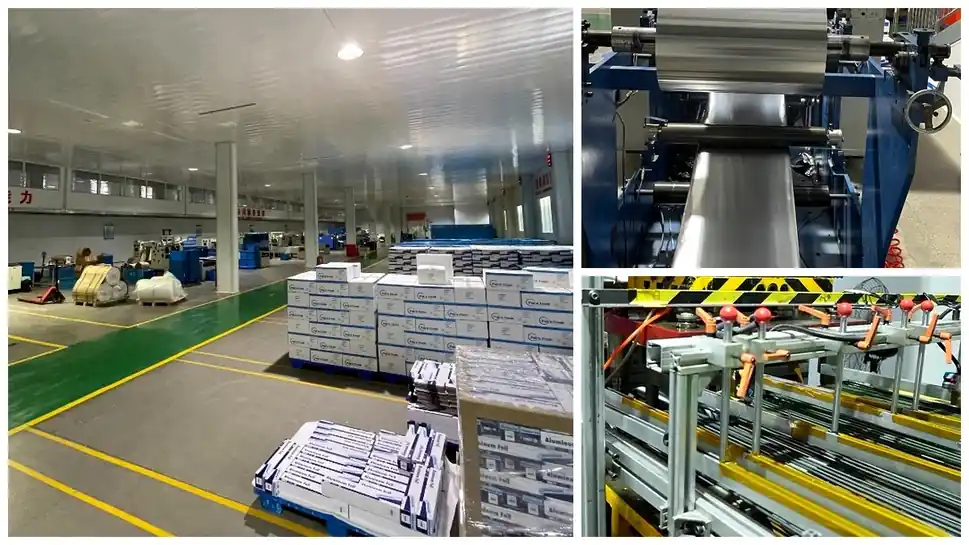
MUNWEY is the overseas B2B brand of Henan Mingwei Aluminum Products Co., Ltd., an aluminum processing and finished packaging manufacturer based in Gongyi, Henan Province, China.
The company’s manufacturing history dates back to 1999, when it entered the aluminum processing industry. It began manufacturing finished aluminum foil products in 2013, including aluminum foil food containers and aluminum foil rolls.
Its business covers two main product areas:
- Aluminum Foil Containers: Food packaging containers manufactured through aluminum foil forming processes.
- Aluminum Foil Rolls: Aluminum foil roll products for relevant packaging and foodservice applications.
This manufacturing background gives overseas sourcing teams context when evaluating potential sourcing cooperation. Specific product availability, material specifications, tooling requirements, production arrangements and order quantities should still be confirmed for each project.
5. Frequently Asked Questions
No. APEC is a voluntary economic cooperation forum, not an agreement that automatically grants preferential tariff rates to all member economies. Import duties depend on the destination market, customs classification, country of origin and any applicable preferential trade agreement. Importers should verify the current tariff treatment before confirming an order.
No. APEC cooperation does not automatically create a unified food-contact regulatory system. Each importing market retains its own applicable requirements. Procurement teams should confirm the relevant material, product construction, intended food-contact conditions and supporting documentation for their destination market.
Sourcing teams should review the product specifications, intended application, material and surface-treatment information, applicable food-contact documentation, customs classification, origin information, order quantity, packaging requirements and delivery arrangements.
For customized projects, tooling, samples, packaging design and production validation should also be discussed before order confirmation. Material options such as 8011 and 3003 should be evaluated against the intended product, forming requirements and applicable material documentation rather than treated as automatic proof of food-contact compliance.
Start by comparing quotations under consistent product specifications, quantities and delivery terms. Include product, packaging, freight, duties, customs handling and inland transportation costs. For nested foil containers, also compare nesting efficiency, carton volume and shipping-container utilization. Then assess production arrangements, shipping reliability, inventory coverage and replenishment requirements. A sourcing decision should consider both total cost and the supplier’s ability to support the required supply arrangement.
6. Turning 2026 Regional Trade Shifts into a Sourcing Plan
APEC 2026 has brought regional trade cooperation, connectivity and business coordination into focus. For aluminum foil packaging procurement teams, the practical value of these discussions lies in identifying potential changes and preparing for them through better sourcing decisions.
Rather than assuming that regional cooperation will automatically reduce costs or remove trade barriers, procurement teams should focus on the factors they can verify and manage.
A practical sourcing plan should include five steps:
For importers and distributors seeking aluminum foil food packaging from China, the next step is to connect regional sourcing considerations with actual product and manufacturing requirements.
Explore MUNWEY’s aluminum foil container range or discuss an OEM and ODM project based on your target market, product requirements and purchasing plans.
Regional trade opportunities become valuable when they can be translated into clear, verifiable sourcing decisions.