
APPLICATIONS & AIRLINE CATERING NEEDS
Airline Meal Packaging Applications
From flight kitchen assembly to aircraft uplift and in-flight service, airline meal packaging needs vary across preparation, transfer, and cabin handling stages.
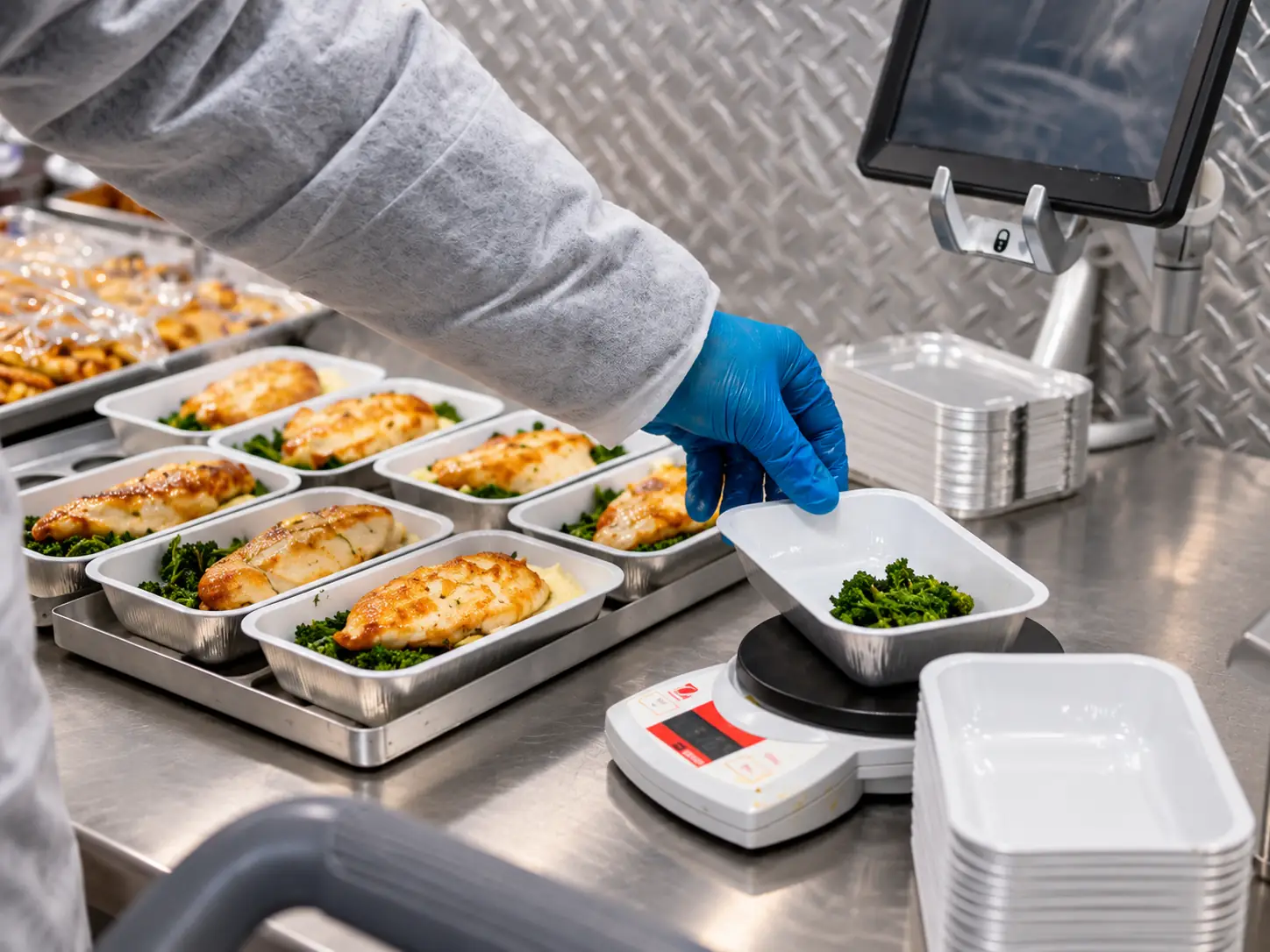
Flight Kitchen Meal Assembly
Airline catering kitchens assemble portioned entrées and special meals for scheduled flights. Container footprint, usable depth, and rim geometry influence how meals are portioned, closed, and arranged alongside other meal-tray components.

Catering Dispatch & Aircraft Uplift
Packed meals move through ground handling and aircraft uplift before reaching the aircraft galley. Finished pack height, closure condition, and handling loads are relevant when meal units are stacked, transferred, or arranged in catering racks and trolleys.

In-Flight Galley Preparation & Service
Cabin crew retrieve meals from onboard storage and, where required, reheat them before service. The selected container configuration needs to accommodate lid opening, handling after heating, and meal presentation within the limited workspace of an aircraft galley.
Meal Portion & Tray Footprint
Confirm target meal weight or volume, usable container depth, and top outer dimensions. Evaluate the filled container footprint against the specified meal-tray layout and adjacent service items.
Rim, Lid & Opening Method
Evaluate rim geometry, the intended lid configuration, closure method, and clearance above the food. Confirm container–lid compatibility and opening requirements for the selected packaging format and service process.
Meal-Tray & Galley Equipment Clearance
Check overall dimensions and assembled height against the specified meal trays, carriers, trolley storage arrangements, and oven inserts, where applicable. Confirm physical fit using equipment drawings or samples rather than nominal dimensions alone.
Storage & Galley Reheating Conditions
Define the intended cooling, storage, transport, and onboard reheating conditions. Verify the selected container, lid, and coating configuration against actual equipment, temperatures, heating duration, and handling requirements.
CONTAINER SELECTION
Choosing Aluminum Foil Containers for Airline Meal Packaging
Explore aluminum foil containers for airline meal packaging and in-flight catering, with container dimensions, portion capacity, rim configuration, and matching lid requirements considered together.
For Portioned Airline Meals & In-Flight Catering
Airline meal packaging calls for container dimensions that suit portioned entrées and planned meal-tray layouts. Footprint, usable depth, and capacity guide initial selection, while rim geometry and matching lid requirements are considered as part of the finished pack.
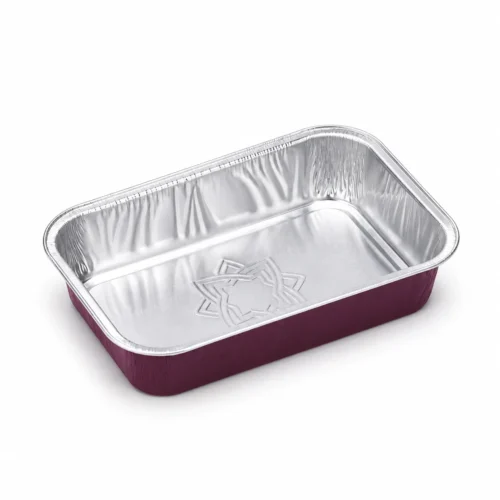
Airline Aluminum Foil Food Container
Request SampleTop Out Dimensions 159 × 102 mm Bottom Dimensions 140 × 82 mm Depth / Height 32 mm Capacity 340 ml Carton Dimensions 42*28*34cm
Products could not be loaded. Reload page
SPECIFICATION REVIEW
Confirm Your Airline Meal Container Specifications
Review key container dimensions, lid interfaces, assembled pack height, and equipment operating parameters before confirming samples or production specifications for your airline catering project.

Container Geometry & Filling Dimensions
Define the required portion weight or volume and food headspace. Check top outer dimensions, bottom dimensions, container depth, and usable filling space against the specified meal format and dimensional drawings.
Rim Profile, Lid Fit & Assembled Height
Specify the container rim profile, matching lid dimensions, and intended closure method. Confirm food clearance, rim engagement, and the assembled pack height using the actual container and lid configuration.
Equipment Envelope & Loading Clearances
Provide the available width, depth, and height within the intended meal trays, catering carriers, or galley equipment. Compare these limits with the assembled pack dimensions, including specified tolerances and the required loading direction.
Operating Temperatures & Material Requirements
Specify the storage temperature range, transport conditions, and intended galley reheating equipment. Include heating temperature, duration, and whether the lid remains in place or is removed. Review applicable material and coating requirements against these conditions.
Technical Drawings, Samples & Order Requirements
Share dimensioned drawings, reference containers or lids, and relevant equipment details where available. Include estimated order quantities, packaging requirements, and any project-specific specifications to support feasibility review and sample evaluation.
CUSTOMIZATION SCOPE
Custom Aluminum Foil Container Options for Airline Catering
Explore container customization for airline meal packaging, from forming profiles and portion dimensions to material specifications, lid configurations, surface finishes, and packing requirements. Non-standard requests are subject to tooling and production feasibility review.


Container Geometry & Tooling
Container profiles, forming dimensions, corner geometry, and tooling requirements.

Rim & Lid Interface
Rim profiles, lid configurations, and closure compatibility requirements.
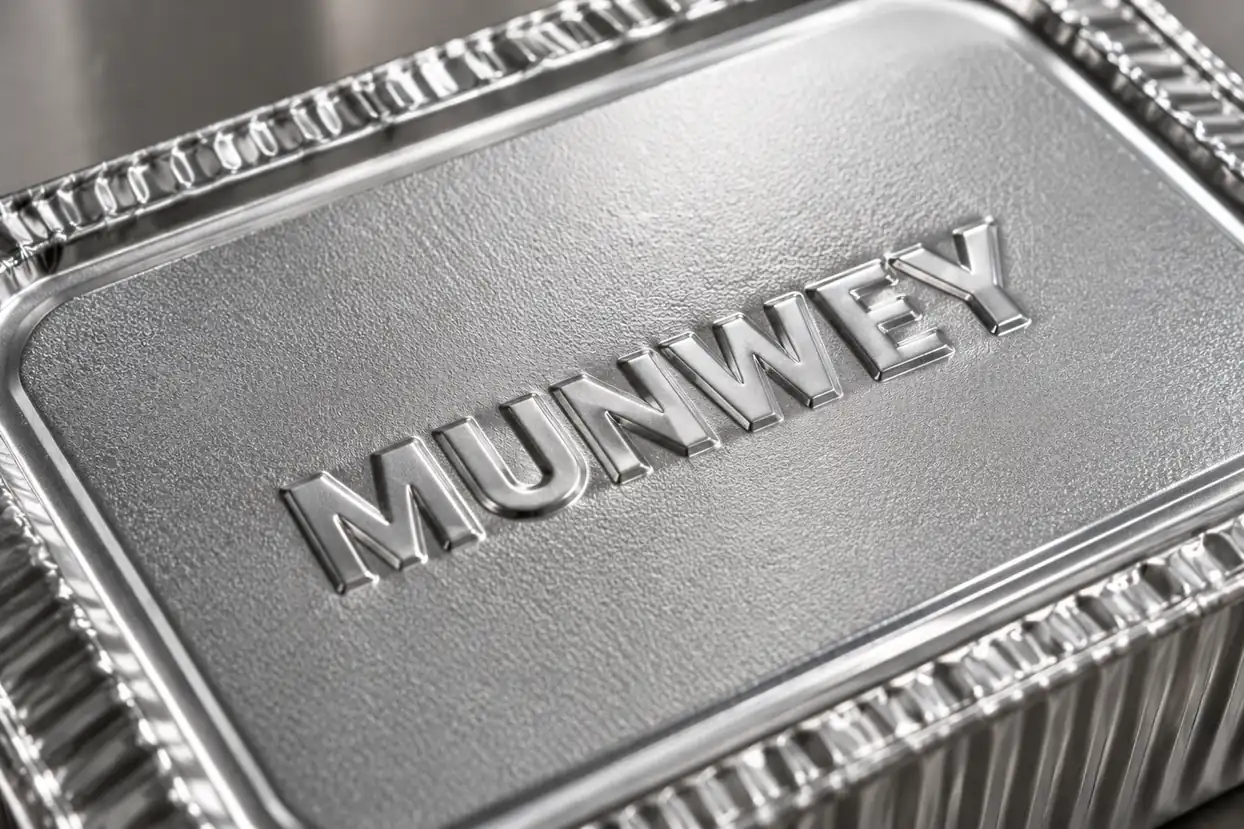
Material & Surface Options
Aluminum specifications, foil thickness, temper, and available surface finishes.
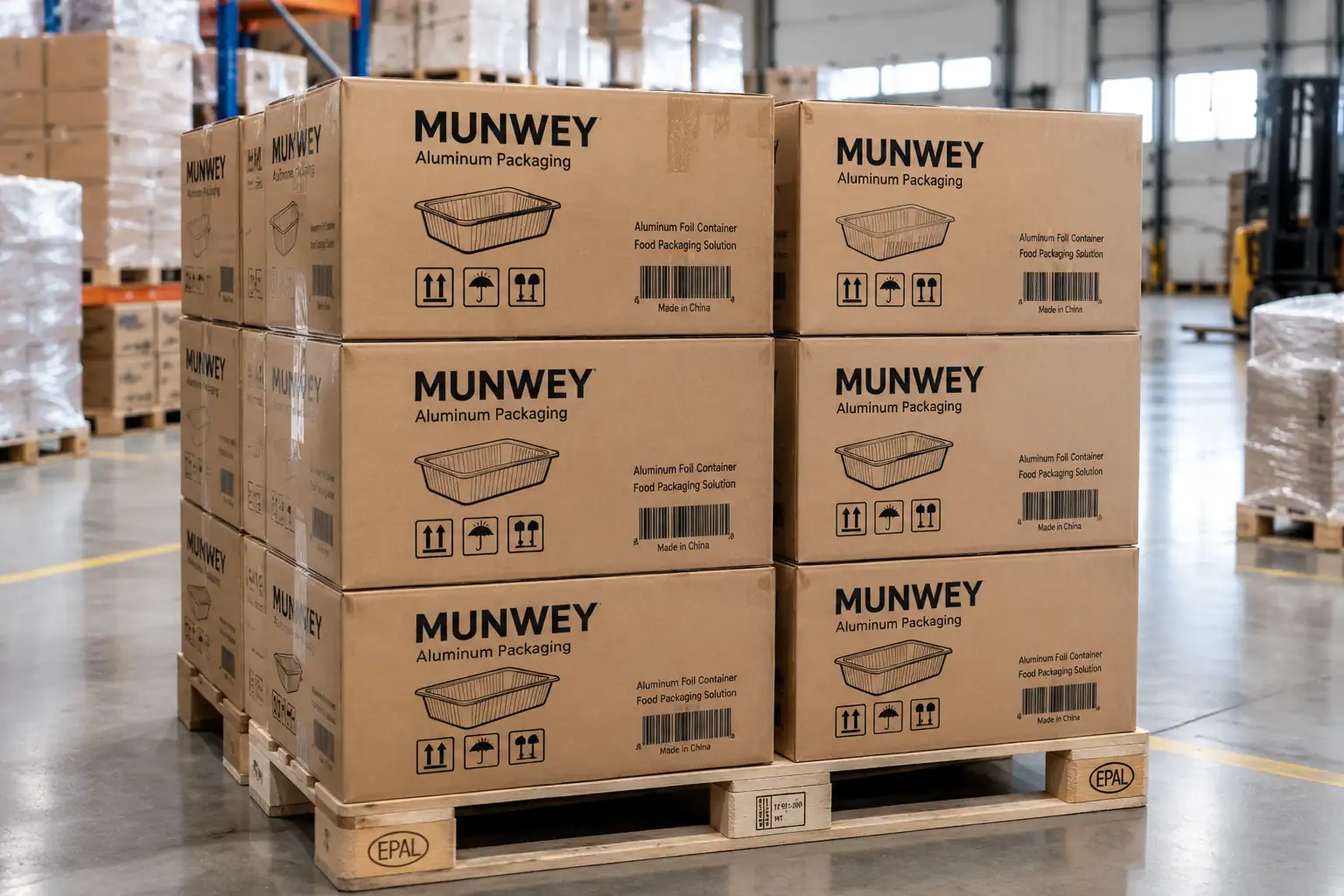
Packing & Supply Planning
Carton configurations, product identification, and shipment requirements.
Container Profile & Tooling
Explore container profiles, corner radii, sidewall features, and compartment layouts based on the intended meal format. Existing moulds and new tooling requirements can be assessed against project drawings or reference samples.
Dimensions, Depth & Capacity
Define target outer dimensions, base footprint, usable depth, and filling capacity for portioned airline meals. Where space is limited, compare proposed dimensions with the specified meal-tray layout and equipment clearances.
Material & Foil Specifications
Review available aluminum alloy and temper options, foil thickness, and coating requirements in relation to container geometry, forming conditions, and the intended application.
Rim, Lid & Closure Configuration
Coordinate container rim geometry, matching lid dimensions, and the intended closure method. Review lid engagement, assembled pack height, and opening requirements as part of the overall packaging configuration.
Surface Finish & Branding
Explore available foil colors and surface finishes alongside project-specific branding or identification needs. Discuss artwork, marking locations, and the proposed application method to determine suitable options.
Packing Configuration & Supply Planning
Specify carton quantities, packing arrangements, labeling requirements, and estimated order volumes. Include any storage, palletization, or shipment requirements relevant to the catering supply chain.
MANUFACTURING & QUALITY
Manufacturing & Quality for Airline Meal Packaging
MUNWEY combines aluminum processing with foil container manufacturing. For airline meal packaging projects, we focus on material specifications, container forming details, dimensional requirements, and relevant quality documentation to support product and supplier evaluations.


Integrated Aluminum Processing
MUNWEY’s manufacturing operations include aluminum cold rolling, slitting, annealing, and coating. Alloy, temper, foil thickness, and surface requirements are reviewed in relation to the selected container design, forming process, and intended application.

Aluminum Foil Container Forming
MUNWEY manufactures aluminum foil containers in different shapes, depths, and rim configurations. Forming requirements are defined around the selected container geometry, corner profiles, sidewall structure, and rim details, with tooling considerations based on the intended product specifications.

Dimensional & Specification Review
Agreed drawings and reference samples establish the dimensional targets for product evaluation. MUNWEY reviews top and bottom dimensions, formed depth, and rim geometry against the selected specifications when discussing sampling, production requirements, and repeat orders.
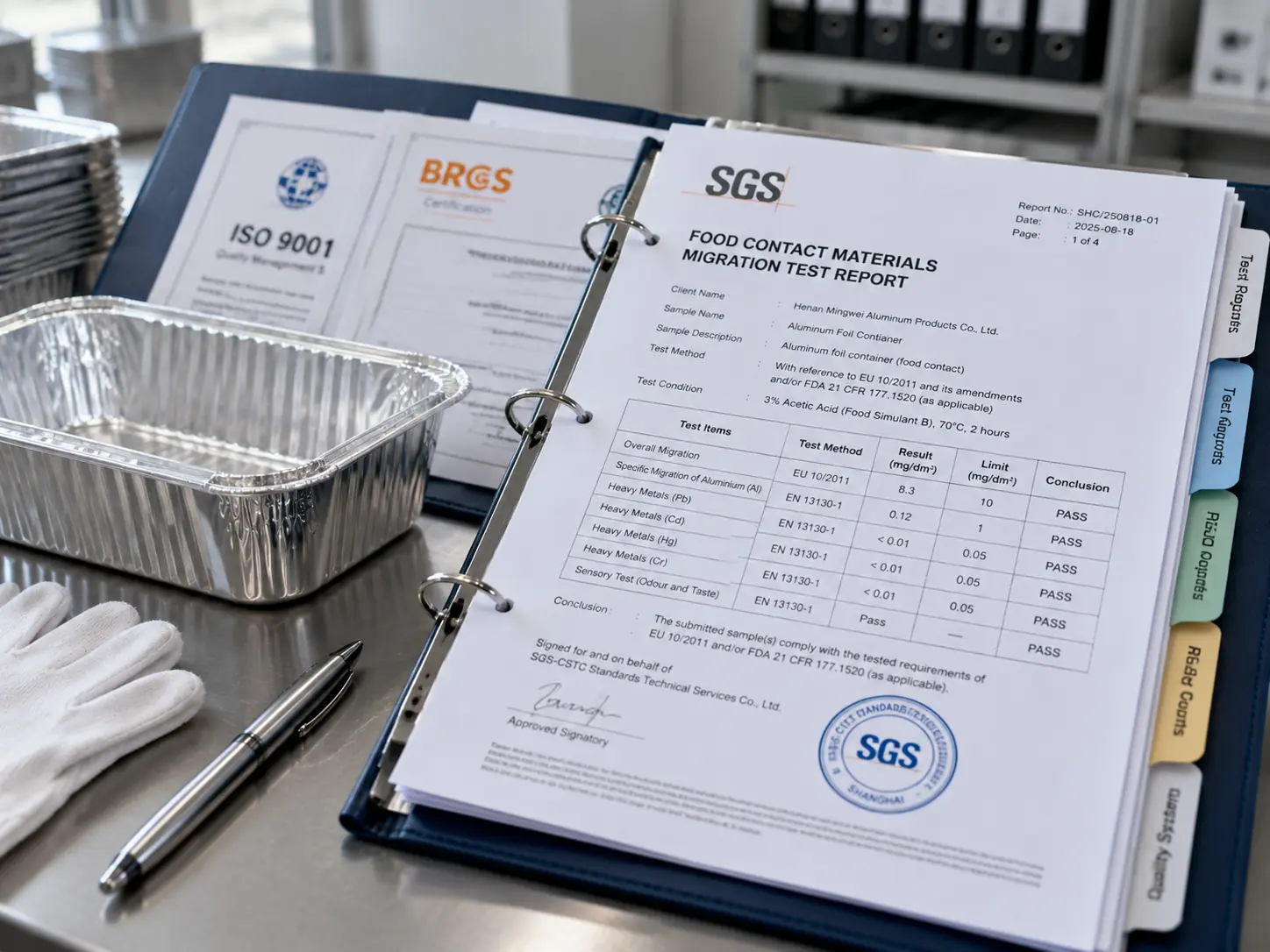
Quality Systems & Documentation
Quality-system records, material specifications, and applicable test reports support supplier and product evaluations. Documentation should be reviewed for validity, product coverage, destination-market requirements, and the intended food-contact application.
FAQ & PROJECT INQUIRY
Let’s Discuss Your Airline Meal Packaging Requirements
Find answers to common questions about airline meal container selection, matching lids, galley equipment compatibility, reheating requirements, customization, samples, and ordering. Share your project requirements with MUNWEY to discuss suitable packaging options and quotation details.
Frequently Asked Questions
Practical answers about airline meal container specifications, matching lids, equipment clearance, onboard reheating, customization, minimum orders, and quality documentation.
Start with your meal portion requirements, container dimensions, and planned meal-tray layout. Key selection factors include top and bottom dimensions, usable depth, capacity, rim geometry, and matching lid requirements. The finished packaging configuration should also be reviewed against the intended catering workflow and equipment.
MUNWEY lists the airline aluminum foil food container (Code 031) and its matching lid (Code 030) as separate product SKUs. The lid is not automatically included with the container. Confirm the intended closure method, container–lid fit, assembled pack height, and handling requirements before finalizing your selection.
Compatibility depends on the specified equipment and the dimensions of the complete packaging configuration. Provide relevant meal-tray dimensions, trolley or carrier clearances, and galley equipment details. Dimensional drawings and physical samples can be used to evaluate fit before confirming the intended application.
Aluminum foil is a heat-conductive material commonly used in oven-ready food packaging. For airline catering, suitability depends on the selected container, lid, coating, and specified reheating conditions. Provide the galley oven type, temperature, heating duration, and lid handling requirements so the complete packaging configuration can be evaluated. Equipment-specific verification may be necessary.
MUNWEY can review project-specific requirements involving container shape, dimensions, capacity, foil specifications, rim and lid configurations, surface finishes, and packing arrangements. Custom designs and non-standard specifications are evaluated according to tooling, material, and production feasibility.
MUNWEY’s general minimum order quantity is 300 pieces. The applicable MOQ may vary by product specification, selected SKU, or customization requirements. Catalogue packing quantities are separate from minimum order requirements. Sample availability and arrangements can be discussed for dimensional checks, equipment-fit evaluation, and other project-specific testing needs.
Documentation requirements depend on the selected product, destination market, and intended application. Relevant material specifications, quality records, and applicable food-contact test reports can be reviewed for availability, validity, and product coverage. Share your required documents and regulatory requirements when submitting an inquiry.
Contact MUNWEY
Tell us about your airline catering project, including meal formats, container dimensions, matching lid requirements, relevant galley equipment, estimated order quantities, and destination market. Our team can review your requirements and discuss available product options, customization, and quotation details.